Editor’s note: This is the third of a series of supplemental editorial material from UPPAA Spring 2025 keynote speaker Michael Carrier. As in any editorial, opinions are solely those of the contributing commentator. To read part two, see the Fall 2025 newsletter or the blog post here: www.uppaa.org/?p=10328
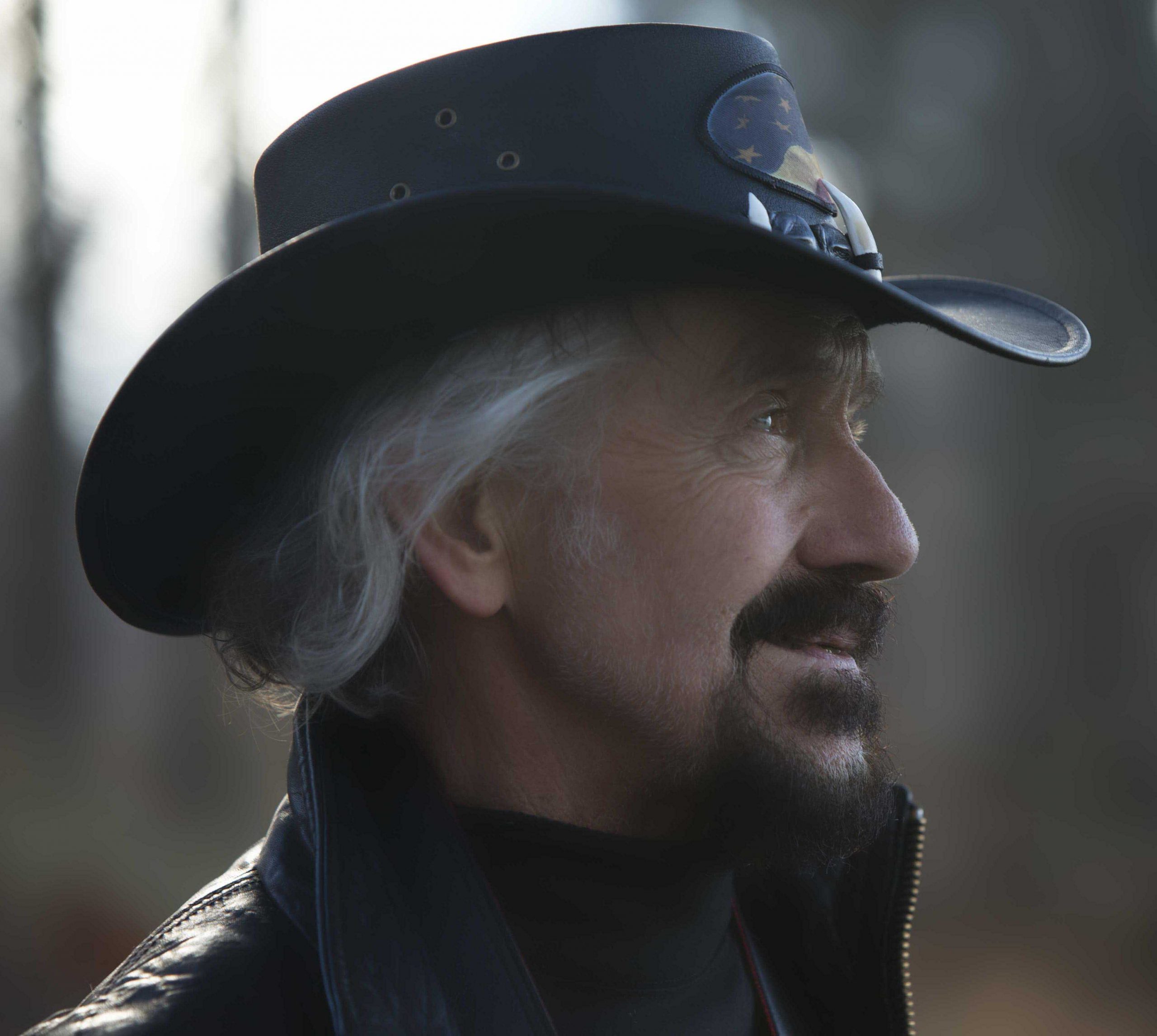
A question that frequently gets asked me is this: “What sort of education best prepares a person for a career in writing hardboiled thrillers?” My short answer is that I do not think there is any degree program that could properly serve that purpose in any writer’s life. I think some writers write simply because they enjoy doing it, while others write because they sense that they have to. But, I do not think that it can be taught.
Even though I do not credit my time spent in classrooms with providing me with what a writing career requires, neither do I discredit the role educational experience can play. Here is a summary of my academic background:
In high school I was informed by my counselor that I had scored highest in my school on their IQ/aptitude test, and that considering my affinity for math and hands-on shop work, I should think about electronics upon graduation (which was to be from South Haven (MI) High School in ’62).
So, after high school graduation, I spent about a year in Chicago at DeVry Technical Institute. But then I left and went to Evangel University.
At Evangel (then CBC) I was editor of the college yearbook and graduated with a Bachelor’s Degree in Bible (in ’67). Academically, my GPA ranked me second highest in my class. I received a fellowship to study Semitic Languages at New York University.
Even though my fellowship covered all tuition, and paid me a small stipend, I still sought out jobs on the side. One of these was working for a diamond wholesaler in Midtown Manhattan. I bought two pin-striped suits from a store called Brooks Brothers. They were nice suits— I got a conservative haircut and looked quite professional.
I started out doing general office work, but then got asked to tackle another task there — that was as a diamond courier. I was assigned to pick up and deliver uncut diamonds from dealer to dealer throughout New York’s Diamond District. I knew that would be dangerous, so I told them I would do it, but only if I could dress as I wished, and be allowed to carry a walking stick for defensive purposes.
I had seen couriers from other houses come into our place, and they never dressed well—they looked almost like they were homeless.
I was granted permission. So, I switched from my pin-stripes to a navy pea coat, engineer boots, blue jeans, and a blue knit hat. I had no trouble growing my hair out.
I already had a walking stick, because our apartment at that time was in a very rough part of Lower Manhattan. We (my wife Evie and I) had rented an apartment on East 6th Street between Avenues A and B (known as Alphabet City). The neighborhood was controlled by drug dealers and muggers. I carried a club that I had made from a shovel handle. I had cut it off walking stick length. I weighted the bottom down with a threaded brass pipe cap on the end. I drilled it out and filled it with melted solder. I then strapped the stick to my wrist with a piece of rawhide.
I worked for that diamond wholesaler for two years.
That stick had so impressed my landlady (when she saw me carrying it everyday for my job) that she asked me if I would be the “man of the building.” I asked her, “What does that mean?” She told me that instead of paying rent, I would work for her as the cop of the building — i.e., her enforcer. If any tenant needed help with a burglary, rapist, domestic dispute, attacker, or a robbery, I would be the one she could call on. “Sounds cool,” I thought, so I accepted the offer.
As the Man of the Building I got to deal with knife wielders, gun totters, burglaries in progress, attempted rapes, and lots of idiots on drugs. Sometimes I got to walk barefooted through broken glass, wearing only my boxer shorts, kicking guys out of the building and then getting shot in the face with pepper spray for my effort. My shovel handle and I did the job quite successfully, and so I developed a reputation on the entire street. When the two New York City neighborhood police officers got shot and killed in front of my apartment my territory expanded and I inherited the title “Man of the Block.” That reputation stuck with me until I left the city.
I studied at NYU for three years. I received my masters degree (Hebrew Studies) from the school and was researching my PhD dissertation. My advisor there told me that I had received a perfect score on my comps—and that mine was the only perfect score he had ever seen. I was looking forward to receiving my doctorate from NYU, but that was when stuff started to unravel.
This was the summer of ’72 (maybe ’73). It was during a period of political turmoil throughout the US. That’s when the Black Panthers took over the NYU campus and effectively closed the school down for the entire summer. When it reopened in the fall, it did so without my program. (I need to point out that NYU has developed a different take on this period of history. All I can say is that the campus was closed down that summer, it was physically occupied by some group, and my program was terminated.)
In the fall, it was somehow determined that the Department of Hebrew Studies was not backed up by an “Endowed Chair,” and therefore could be merged into another program should the University chose that route. So, my entire program was effectively terminated, and a Department of Black Studies was born. That event provided me with a significant speed bump in my career options.
My program was then merged into the Department of Near Eastern Studies, and that was not at all what I had bargained for. To my knowledge all of my schoolmates accepted the merger, but I did not like it at all. So I asked what my options were.
They told me that if I wanted, they could get me into a great program at the Dropsie School of Hebrew and Cognate Learning. I realize that the name looks more like a physical condition than that of a university. But, Dropsie actually was a significant part of the University of Pennsylvania—an Ivy League school. And I knew that if I took my studies there I would have access to tens of thousands of the original materials that were housed at Penn’s library and at the University Museum.
They also informed me that while there would be no fellowships available to me at Penn, they were confident that they could arrange for some sort of scholarship for me. That sounded like a great opportunity, so I opted for it. (And, besides, it afforded Evie and me a new adventure—and we were always eager for new adventures).
My specific field of interest was Neo Sumerian, and Dropsie had an absolutely great professor heading up that program. All was good—or so it seemed. … This is where it began to soak in that my career was beginning to take another radical turn.
The scholarship I was given was actually a working scholarship—it required that I work for the school. That was okay, though, because it was only for an hour or so per day, five days a week. All they wanted me to do was to open the mail.
What this involved was for everyone to leave the office area, while only I would remain in it to open the mail.
What they were doing is assigning me to be the one to screen for special mail and special packages. I was tasked to open up all of it and determine what was acceptable and what was not. The materials deemed to be unacceptable could range from letter bombs to larger IEDs (improvised explosive devices). Other universities had been attacked in just that sort of fashion, and Dropsie wanted to be safe (early ‘70s).
I took it on as a challenge. I viewed my new “canary in the coal mine” role as a superb source of excitement — better than two cups of subsidized espresso every morning!
There were, however, no manuals telling me how to do it. So, I pretty much had to develop my own system. I opened everything from the bottom, and in a very careful fashion. I would slit a small hole with a razor knife, and with a small flashlight take a peek inside. If I found no wires, spring-activated switches, or strange solid materials, I would open it all the way up. Thankfully, during the two years I did this I found no bombs of any sort.
That was my introduction into the world of security—a trade which I eventually developed into a successful business, and sometimes into a virtual art form.
During my two years in Philadelphia, I did take an active role on campus. I was elected president of the student association at Dropsie, plus, I edited the weekly newsletter and had my own private office. Things were again looking bright. I loved the excitement of the challenge. I totally respected my professor, and was progressing quite nicely—or so I thought.
It was then that the bottom fell out of everything yet again. Something apparently cropped up with regard to my professor. Whatever that something was I never learned. All I was told was that my professor was denied tenure. I protested because I thought that he (my professor) was superb. I published my opposing opinion in my newsletter.
Two days after my article I found my key no longer granted me access to my office. I was never personally confronted nor officially fired, but I could see I had no future there. I climbed over the wall of my office, through the opening above the suspended ceiling, gathered up my private papers, and moved out of Philadelphia.
My professor resigned and became professor of Ancient Near Eastern and Judaic Studies at another prestigious Ivy League school. He remained a tenured professor at that other school for the rest of his career.
I found it very hard to leave all my work behind, but I was totally sick of the politics in academia, and determined that I had to find another path for my life. I am quick to admit that I have a deep faith in God, and I have always believed totally in the providential nature of our lives. That belief never wavered. The issue with me was that I was just failing to find out where that providential purpose was leading me.
After a cooling off period, Evie and I moved back to Michigan, started our family, and established new plans for our future.
I recalled how exciting I had found carrying around millions of dollars worth of diamonds for New York’s diamond wholesalers, fighting off the criminal element on the streets of Greenwich Village, and how much fun it was to search packages for bombs in Philadelphia. So, I told Evie that I’d bet that there’s a big need for security experts, and that it would not be so political. Of course, I realized that I was anything but an expert in security, but I also realized that I did know how to do sound research on most subjects. And so that’s what I did.
I read a couple books and then called a reputable security company that was looking for help, and I set up an appointment. I went into my meeting knowing more about the fine points of the industry than the fellow who was interviewing me. I told him about my experiences in New York and Philadelphia. And I got the job.
Within a year I was made general manager at that firm (which was one of the largest in West Michigan). And I was soon designing, installing and servicing systems for the Department of Military Affairs, and other large organizations and major corporations.
Only a few years later I started my own firm. I ran that business for about 30 years. I continued doing contract work for the Military, the DEA (Drug Enforcement Agency), General Motors, and other large and small corporations, along with thousands of private individuals.
It was still while I was running my security firm that I wrote my first book. It was entitled WIND. I believe that was about 20 years ago. I did it as a self-published book through Amazon (under the name Mike Carrier).
WIND was a compilation of a series of articles I had earlier published weekly in local and regional newspapers. I wrote that column for over three years (also under the name “Mike Carrier”). It centered on the role that God played in the development of our nation since its inception. … For instance, history records that 106 out of the first 108 institutions of higher learning in the US were founded specifically for the training of ministers of the gospel. … To my knowledge that is true even for all those elite Ivy League institutions (like the University of Pennsylvania).
I did continue to run my security firm until about fifteen years ago. That was when I developed a heart condition and had to sell the business and move on. After my surgeries I quickly got bored with retirement and started writing hardboiled thrillers, which I marketed as “murder mysteries set in the Midwest.” I did this under the name “Michael Carrier.” To date I have published 18 Jack Handler hardboiled thrillers.
Well, that’s the story of how I got to where I am, and what influenced me along the way. I trust that readers can appreciate the fact that the role formal education played in my development as a writer was indirect at best. What the universities did for me is teach me to work hard and think harder.
Watch for Part Four of my “UPPAA Confidential” series, which will be: “My view of the role AI ought to play in the writer’s life.”